
“The Lord is faithful in all his words, and gracious in all his deeds.” – Psalm 145:13
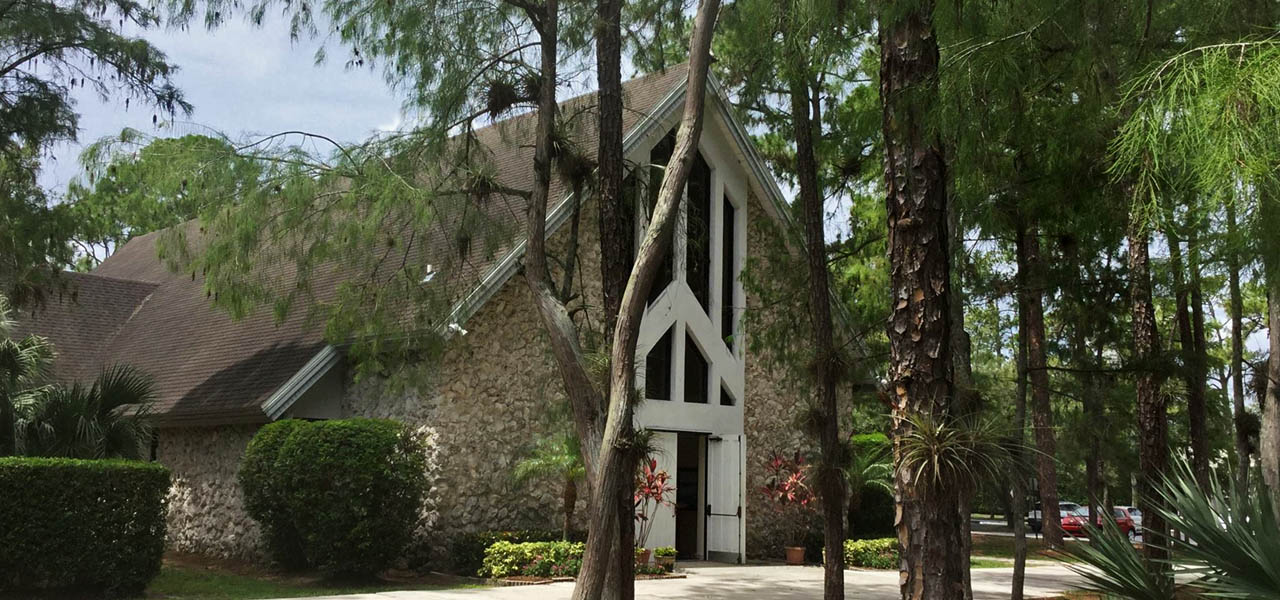
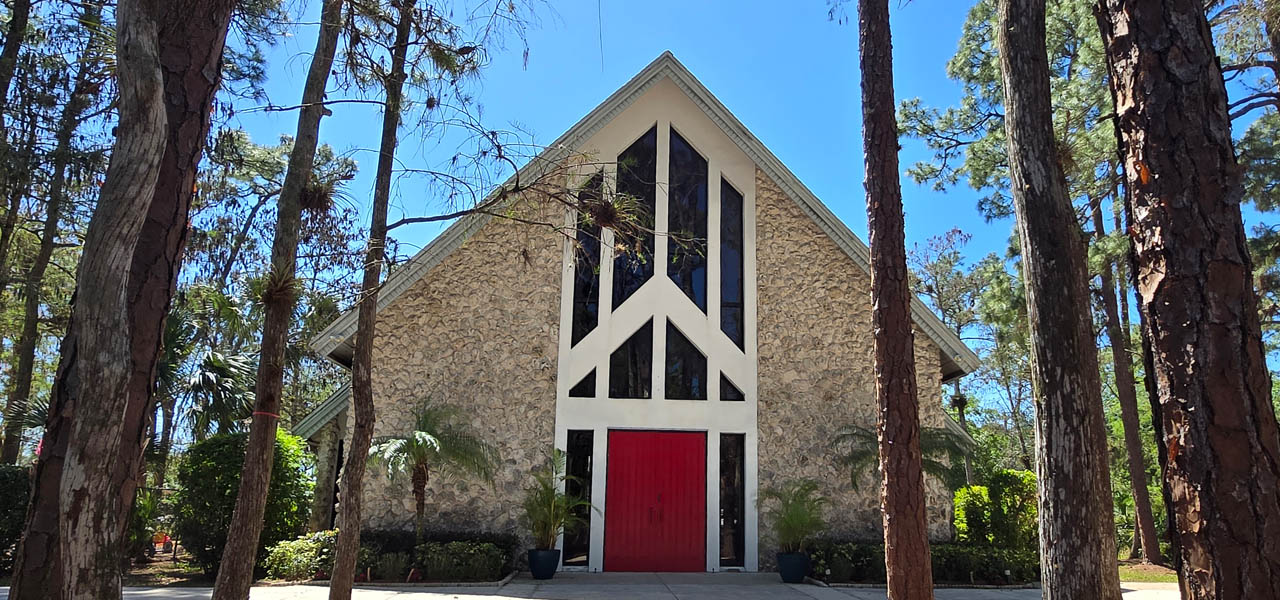
AN INTRODUCTION: St. David’s In the Pines celebrates the inspired generosity and vision of the Bishops, Clergy, Lay Leadership, parishioners and volunteers who came before us, and appreciates and supports the dedication of today’s leadership.
St. David’s Planned Giving welcomes those who, like their forebears, know in their hearts that they have a mission to leave something behind – something that will live long after them, as testimony to the faith and vision of these times. The purpose is to establish a legacy of strengthening the faith and spiritual future of generations yet to come, graced by the Gospel and the spirit of Jesus Christ.
As you thank God for your many blessings, please consider remembering St. David’s In The Pines in your estate plans. All gifts to the St. David’s go directly to St. David’s – no fees or other expenses are involved. The sole financial objective is to strengthen St. David’s for years to come.
MAKING A PLANNED GIFT
Gift planning is sometimes called the “How” of giving. It naturally follows the “Why” – your motivation or reason for giving in the first place.
As Episcopalians we each have our own reasons for wanting to make a planned gift to support our church and the ministries that are meaningful to us. The information on this web page describes the different ways you can accomplish this through immediate or deferred gifts. It is provided to give you a basic understanding of the planned giving options, not as a complete reference for all the options available.
While we strongly urge you to consult with an attorney before making a final decision on any planned giving option, please feel free to call us for more detailed information about giving choices as you consider your options…
IMMEDIATE GIFTS
CASH, CHECK OR CREDIT CARDS
Gifts of cash are routinely used to pay pledges and make special (capital) gifts.
Procedure: Make a check payable to: St. David’s In The Pines.
The date of the gift is the date of the U.S. Postal Service postmark on the envelope in which you sent the check. If another carrier is used, it is the date on which the church or agency received the package. Your charitable gift may qualify for a tax deduction.
COMMEMORATIVE GIFTS
Give a gift “in honor or in memory of a special friend, family member or an important or memorable occasion. The gift is 100% tax-deductible and an acknowledgment will be sent to the honoree.
APPRECIATED SECURITIES AND STOCK
Many donors use stocks, bonds, or mutual funds to make gifts. If they have increased in value since you obtained them, there can be significant tax advantages:
-a. Your income tax deduction is usually based on the full market value of the securities on the date of the transfer;
-b. You can usually avoid paying capital gains taxes that would have been due if the securities had been sold. If you wish to donate securities that have diminished in value since you obtained them, it is wiser to sell the stock, claim the capital loss as a tax deduction, and donate the resulting cash.
Securities and mutual funds that have increased in value and been held for more than one year are popular assets to use when making a gift to St. David’s In the Pines. Making a gift of securities or mutual funds offers you the chance to support our mission while realizing important benefits for yourself.
When you donate appreciated securities or mutual funds in support of St. David’s, you can reduce or even eliminate federal capital gains taxes on the transfer. You may also be entitled to a federal income tax charitable deduction based on the fair market value of the securities at the time of the transfer.
Securities are most often used to support our work in the form of:
An outright gift. When you donate securities to St. David’s, you receive the same income tax savings that you would if you wrote a check, but with the added benefit of eliminating capital gains taxes on the transfer, which can be as high as 20%.
A transfer on death (TOD) account.* By placing a TOD designation on your brokerage or investment account, that account will be paid to one or more persons or charities after your lifetime.
*State laws govern transfer on death accounts. Please consult with your bank representative or investment advisor if you are considering this gift.
Procedures: If the securities are in “street name,” that is, held in an account at a financial institution but accounted for as belonging to you, instruct your broker by letter to transfer ____ shares of __________ stock to an account in the name of St. David’s In the Pines.
The date of a gift of securities is the date on which the transfer of ownership took place.
If you have the actual certificate for the stock, bond, or mutual fund, mail it to the church in one envelope. To assure security, do not sign the stock certificate. In a separate envelope, enclose a signed stock power guaranteed by a bank officer. Once again, for security in shipment, do not complete the description of the securities. The date of the gift is the date of the postmark on the envelope containing the stock power. If another carrier is used, it is the date on which the church received the package.
Valuation: The IRS calculates the value of the gift as the average of the highest and lowest selling prices of the securities on the gift date.
The assets described here may be used to fund both immediate gifts and life income gifts. The procedures refer only to immediate gifts.
IRA CHARITABLE DISTRIBUTION
You can give any amount (up to a maximum of $108,000) this year from your IRA directly to a qualified charity such as St. David’s In the Pines without having to pay income taxes on the money. Gifts of any value $108,000 or less are eligible for this benefit and you can feel good knowing that you are making a difference at St. David’s. This popular gift option is commonly called the IRA charitable rollover, but you may also see it referred to as a qualified charitable distribution, or QCD for short.
DONOR ADVISED FUND
A donor advised fund (DAF), which is like a charitable savings account, gives you the flexibility to recommend how much and how often money is granted to St. David’s and other qualified charities. You can recommend a grant or recurring grants now to make an immediate impact or use your fund as a tool for future charitable gifts.
You can also create a lasting legacy by naming St. David’s In the Pines the beneficiary of the entire account or a percentage of the fund. With a percentage, you can create a family legacy of giving by naming your loved ones as your successor to continue recommending grants to charitable organizations. Contact your fund administrator for a beneficiary form.
REAL ESTATE
You may have a second or even a third home. Your primary residence may no longer be practical. Giving real estate to the church or its ministries is a time-honored way of making a substantial gift with an asset, usually highly appreciated, that might otherwise be underutilized.
Procedures: To make a gift of real estate, whether or not it includes a dwelling or other buildings, the property should be free of financial encumbrances such as mortgages or liens. It should be readily marketable, and you should be aware that the church may sell the property after it is given. St. David’s will want to conduct an environmental assessment to insure that there are no hazardous waste conditions at the site that could become a liability to the new owner. The donor usually pays for a property survey, appraisal, the environmental assessment, and the preparation of the deed transferring the property. The gift date is the day of the closing.
PERSONAL PROPERTY
You may donate assets such as jewelry, automobiles, paintings, and antiques as immediate gifts, or they can be used to fund life income gifts. As with real estate, you will need to pay for a bona fide appraisal of the item by a qualified appraiser.
Procedures: Your lawyer creates a deed of gift, and a closing takes place at which the item is delivered and the documents are executed. The gift date is the date on which this closing takes place.
Valuation: For your tax deduction to be based on the appraised market value of the item, the item must have a particular usefulness to the church or its ministries. That is, the item must be related to the church’s purposes. For instance, the value of a classical painting donated to an art museum is appropriate to the museum’s mission. It would be deductible at fair market value. But it would be farfetched to declare that the same painting is compatible with the mission of a symphony orchestra. The tax deduction for a gift of personal property that is not related to the charity’s mission is deductible at cost basis only. You should consult with your tax advisors for the appropriate evaluation and reporting requirements.
BARGAIN SALE
A bargain sale is an arrangement by which a donor sells a portion and gives a portion of personal property or real estate to a charity.
Procedure: After a fair market value is determined based on a bona fide appraisal by a qualified appraiser, the property is deeded to the charity. You may take a tax deduction for a contribution of any portion of the value of the property for which the charity does not compensate you. For example, you make a bargain sale of your $100,000 house to St. David’s In the Pines for $50,000. The church pays you $50,000. You may take a tax deduction for the $50,000 donated portion. The gift date is the date the property changes hands.
RETIREMENT ASSETS
Retirement funds are an increasingly valuable asset to many people and an asset often overlooked as a source of charitable gifts. Giving from an IRA, a 401K, or 403B plan can provide you with important tax advantages. Since the money that has accumulated in these plans has never been taxed, the IRS levies heavy taxes on any distribution, unless that distribution is to a charity. After you die, your retirement fund could be subject to this income tax, plus estate taxes, considerably diminishing its value before being passed on to heirs. By naming a charity as beneficiary of the remaining retirement fund assets, you can avoid this pitfall. Give other assets to family members and other heirs. Legislation is pending that will allow people to avoid retirement fund taxes almost completely if they use them to fund charitable gifts.
GIFTS OF LIFE INSURANCE
You may find that you have some life insurance that you no longer need. “Whole” or “universal” life insurance has cash value and can be donated to church ministries. You would receive a tax deduction for the replacement cost of the paid up policy at the time of your donation, not the face value of the life insurance. If the policy requires continuing premium payments, you can continue paying those premiums and get a tax deduction for each one if it is done in the following way: the policy must be “owned” by St. David’s In the Pines, and it must pay the premiums on it. You make a contribution to the church each year in an amount that approximates the premium, and the camp pays the premium.
DEFERRED GIFTS
WILLS AND BEQUESTS
St. David’s and the wider Episcopal Church have affected many lives. You probably grew, developed, and were nurtured in your faith by the church’s witness and work, and may even have participated in the life of St. David’s. It is only natural that you would want to help continue its work by providing a gift through your estate planning. A bequest through a will is the simplest and most common planned gift. It can be an outright monetary bequest, a percentage of your estate, a percentage of the “rest, residue, and remainder” of your estate after a number of other bequests have been fulfilled, or a specific asset such as personal or real property. It could also be a contingent bequest, to be exercised only if some other intention is unable to be fulfilled (such as a named heir predeceasing you). You can have charitable bequests given for general purposes or to support specific programs at St. David’s. Examples of bequest language are:
“I give, devise, and bequeath to the board and leadership of St. David’s In The Pines, whose address is St. David’s In the Pines, 465 W Forest Hill Blvd, Wellington, Florida, 33414, the sum of $________, to be used for its general purposes.” “I give, devise, and bequeath 10% of the rest, residue, and remainder of my estate to St. David’s In the Pines, whose address is St. David’s In the Pines, 465 W Forest Hill Blvd, Wellington, Florida, 33414, to be used for its Children’s and Youth Ministries.”
Procedures: You should always make your estate plan with the assistance of an attorney. The money spent is minimal compared to the savings in taxes and the reduction in complications and confusion.
You can also make charitable gifts through the use of a codicil to your will, or refer to an instruction letter in the will itself. The instruction letter can be changed from time to time without the trouble and expense of rewriting the will.
WE’RE HERE TO HELP
Our staff at St. David’s will be happy to provide information to you and your tax advisors about tax savings through charitable gifts, in confidence and of course without obligation.
For a confidential consultation, or if you have any questions or need more information about whether, why and how to make your gift to St. David’s, just call us at (561) 793-1976, or drop us a line by e-mail at office@saintdavidsinthepines.org
Thank you for your generosity to God and His church!
